
In recent years, with the increasing severity of global climate change and the continuous rise in energy prices, energy-saving and environmentally friendly products have gradually become the mainstream of the market. Under this trend, inverter heat pumps, as a high-efficiency, low-energy heating, cooling and hot water system, have gradually been favored by more and more home and commercial users. In particular, R32 DC Inverter Heat Pump and R290 DC Inverter Heat Pump, which use new environmentally friendly refrigerants, have become the new favorites of the market.
This article will analyze these two inverter heat pumps in detail to help everyone better understand the working principle, advantages and future development trends of inverter heat pumps.
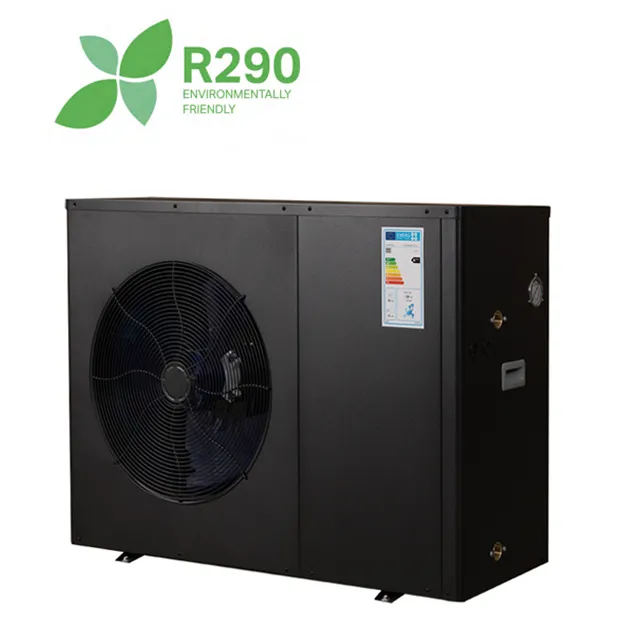
What is an inverter heat pump?
An inverter heat pump is a device that realizes heating, cooling and hot water functions through variable speed regulation of the compressor. Unlike traditional fixed-speed heat pumps, inverter heat pumps control the speed of the compressor, adjust the flow and temperature of the refrigerant, so that the system can automatically adjust the operating speed according to the load demand, thereby achieving higher energy efficiency and better comfort.
Inverter technology enables the device to dynamically adjust power output according to changes in the environment, which means that the system can meet current needs while avoiding unnecessary energy waste. For example, in warm seasons, the compressor of the inverter heat pump will run at a lower speed, and in cold seasons, it will automatically speed up to ensure the stability and comfort of the indoor temperature.
Inverter heat pumps not only perform well in energy saving, but also have a long service life and low noise level. They are increasingly used heating and cooling equipment in modern homes and commercial places.
R32 DC Inverter Heat Pump: A new generation of environmentally friendly refrigerants
With the gradual strengthening of environmental regulations, traditional refrigerants such as R22 and R410A are gradually being eliminated because of their high global warming potential (GWP). In this context, R32, as an environmentally friendly refrigerant with a lower GWP, came into being and became the preferred refrigerant for the new generation of inverter heat pump equipment.
Advantages of R32 DC Inverter Heat Pump
R32 is a single Freon refrigerant. Compared with traditional R410A, R32 has a global warming potential (GWP) of about one-third of R410A. Its low GWP characteristics give it a significant advantage today as environmental regulations become increasingly stringent. In addition, R32 has a higher energy efficiency than R410A and can provide higher cooling and heating effects.
Using R32 refrigerant in variable frequency heat pumps can improve the heating and cooling efficiency of the system. Due to its higher thermodynamic properties, R32 DC Inverter Heat Pump can provide the same heating and cooling effects at lower energy consumption, thereby reducing operating costs. For consumers, using R32 DC Inverter Heat Pump can not only save energy expenses, but also reduce negative impacts on the environment, in line with the requirements of sustainable development.
Working Principle of R32 DC Inverter Heat Pump
R32 DC Inverter Heat Pump combines the advantages of variable frequency technology and R32 environmentally friendly refrigerant. During the operation of the system, DC inverter technology adjusts the speed of the compressor through intelligent control, and can flexibly adjust the power output according to the change of ambient temperature to achieve efficient heat exchange.
In heating mode, R32 refrigerant absorbs external heat through the evaporator, and then pressurizes it through the compressor to increase its temperature before releasing it into the room. Through variable frequency control, the system can adjust the speed of the compressor according to the indoor and outdoor temperature difference and the temperature set by the user, thereby avoiding the energy waste caused by the frequent start and stop of traditional heat pumps.
In cooling mode, R32 DC Inverter Heat Pump also achieves efficient cooling effect by precisely controlling the working state of the compressor. Due to the physical characteristics of R32 refrigerant, R32 DC Inverter Heat Pump can complete cooling work at a lower energy consumption, which not only reduces electricity consumption, but also reduces the environment's dependence on energy.
Safety and compatibility of R32
Compared with R410A, R32 refrigerant is a medium-pressure refrigerant, so its operating pressure is higher, and stricter installation and maintenance standards are required when using it. Nevertheless, R32 is safer, non-flammable and less toxic, making it a safe and reliable refrigerant choice in modern heat pump systems.
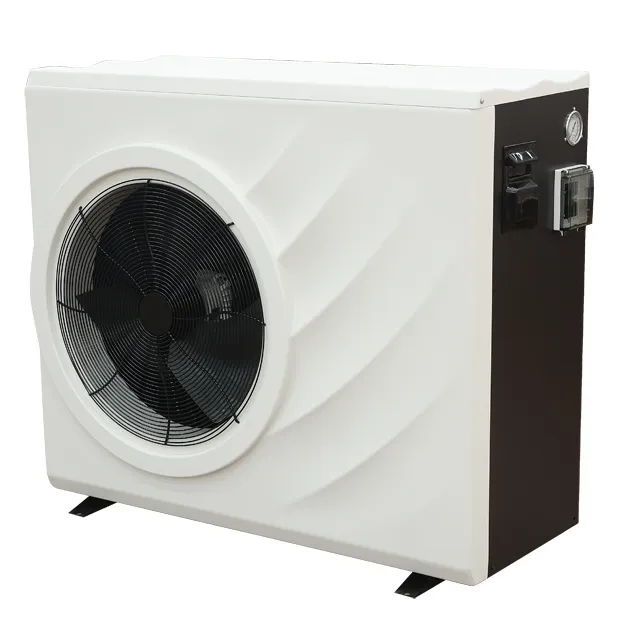
R290 DC Inverter Heat Pump: An environmentally friendly choice for natural refrigerants
Compared to R32, R290 (i.e. propane) is a natural refrigerant and a hydrocarbon refrigerant with almost zero global warming potential (GWP), so it is regarded as an "environmentally friendly choice" in future refrigeration and heating equipment. As a natural gas, R290 has good thermodynamic properties and can still maintain high efficiency in low temperature environments.
Advantages of R290 DC Inverter Heat Pump
As a natural refrigerant, R290 is particularly outstanding in terms of environmental protection. Its GWP value is almost zero, which means that it will hardly have any negative impact on global warming. With the increasing global requirements for climate change and environmental protection, R290 is considered to be one of the most promising refrigerants.
In addition to being environmentally friendly, R290 also has a high energy efficiency ratio and good thermodynamic properties. Compared with traditional Freon refrigerants, R290 can provide higher heat transfer effect at lower power consumption, which makes R290 DC Inverter Heat Pump have significant advantages in energy saving.
Working principle of R290 DC Inverter Heat Pump
R290 DC Inverter Heat Pump also combines the advantages of variable frequency technology and natural refrigerant. Its working principle is similar to other variable frequency heat pumps, which intelligently adjusts the compressor speed to meet the heating or cooling needs in different environments.
In heating mode, R290 refrigerant absorbs external heat through the evaporator and releases it into the room after being pressurized by the compressor. In cooling mode, R290 reduces the indoor temperature by absorbing heat and releasing cold air. Due to its natural properties, R290 DC Inverter Heat Pump has a lower environmental impact and high efficiency, which can effectively reduce operating costs.
The high efficiency of R290 in equipment is also reflected in its requirements for equipment. Variable frequency heat pumps using R290 refrigerant usually require a higher standard sealing system and more stringent safety measures in design to ensure safety. Nevertheless, with the advancement of technology, heat pumps using R290 refrigerant have gradually become sufficiently competitive in the market.
Safety and challenges of R290 DC Inverter Heat Pump
Although R290 is a natural refrigerant and is extremely environmentally friendly, due to its flammability, equipment using R290 must follow strict safety specifications during design, installation and maintenance. These safety requirements require R290 DC Inverter Heat Pump to be more cautious during application, but these safety standards also ensure the safety of the system.
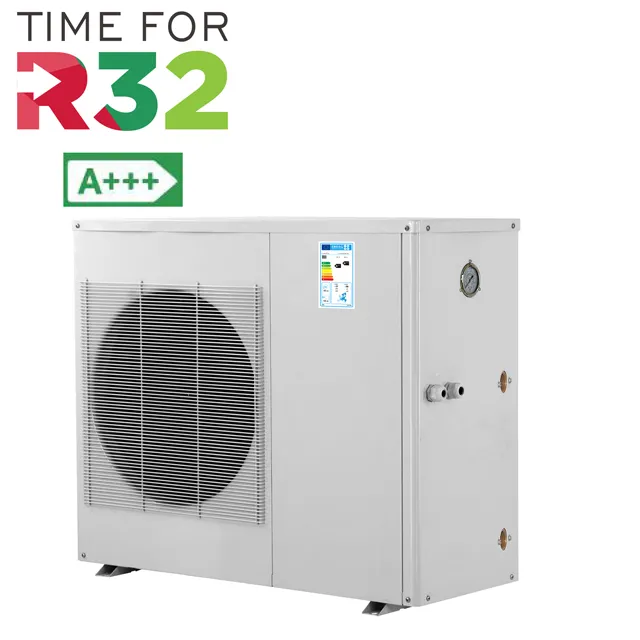
What is the market prospect of Inverter Heat Pump?
With the improvement of global environmental awareness and the support of governments for green and low-carbon technologies, variable frequency heat pumps, especially R32 dc Inverter Heat Pump and R290 dc Inverter Heat Pump, will be more widely used in many fields such as heating, cooling and hot water supply in the future. Specifically:
Policy support
Many countries and regions have introduced policies to support clean energy and low-carbon emission technologies. For example, both the EU and China have formulated plans to gradually phase out high GWP refrigerants and encourage the use of R32 dc Inverter Heat Pump and R290 dc Inverter Heat Pump. These policies provide strong support for the development of the variable frequency heat pump industry.
Market demand growth
As consumers' environmental awareness increases and their demand for a comfortable life increases, the market demand for Inverter Heat Pump will continue to grow. Especially in cold and tropical regions, R32 dc Inverter Heat Pump and R290 dc Inverter Heat Pump will gradually replace traditional air conditioners and electric heaters due to their energy-saving and high-efficiency advantages, becoming the new main force for heating and cooling.
